Getting CO2 pressure right is the difference between a perfect pour and a glass of foam — or a flat, lifeless pint. Here's how to dial it in.
The Basics
CO2 pressure does two things in your kegerator:
- Carbonates your beer — CO2 dissolves into the beer over time
- Pushes beer to the faucet — the pressure drives beer through the line
The tricky part: the right pressure depends on both the temperature of your kegerator and the carbonation level you want.
Quick Reference Table
At 38°F (3°C) — the most common kegerator temperature:
| Beer Style | Target Volumes CO2 | PSI | |---|---|---| | English Ales, Stouts | 1.5–2.0 | 4–8 | | American Ales, IPAs | 2.2–2.6 | 10–13 | | Lagers, Pilsners | 2.4–2.8 | 11–14 | | Wheat Beers | 2.8–3.5 | 14–18 | | Belgian Ales, Saisons | 3.0–4.0 | 16–22 |
If your kegerator runs warmer, you'll need higher pressure. If colder, lower pressure.
Force Carbonating
If you've just kegged fresh homebrew and want to carbonate it:
The Patient Method (Set and Forget)
- Set your regulator to the serving pressure from the table above
- Connect CO2 to the keg
- Wait 7–10 days
- Done — your beer is carbonated and at serving pressure
This is the best method. The beer carbonates naturally and you never have to adjust pressure.
The Fast Method (Burst Carbonation)
- Chill the keg to serving temperature
- Set CO2 to 30 PSI
- Shake or rock the keg for 2–3 minutes (you'll hear the CO2 absorbing)
- Leave at 30 PSI for 24 hours
- Drop to serving pressure and purge excess pressure with the relief valve
- Let it settle for 24 hours before pouring
This gets you drinkable beer in 2 days, but it's easier to over-carbonate. If you go too far, vent the keg and leave it disconnected from CO2 for a day.
Troubleshooting
Too Much Foam
- Lower the pressure by 1-2 PSI and wait a few hours
- Check your beer line length — too short causes foam. Standard is 5-6 feet of 3/16" line
- Make sure the line isn't kinked or warm (running through warm air before reaching the faucet)
- Clean your faucet — buildup causes turbulence
Beer is Flat
- Raise the pressure by 1-2 PSI
- Check for CO2 leaks — spray soapy water on every connection and look for bubbles
- Make sure the CO2 tank isn't empty — check the high-pressure gauge
Beer is Over-Carbonated
- Disconnect CO2
- Pull the relief valve on the keg to vent pressure
- Reconnect at serving pressure and wait 24–48 hours
- Pour off the first couple pints — they'll still be foamy
One Kegerator, Multiple Styles
If you have multiple taps with different carbonation needs (say an English bitter and a hefeweizen), you have a few options:
- Use a secondary regulator — lets you set different pressures for each keg
- Compromise — set one pressure that's close enough for both styles
- Adjust line length — longer lines for higher-pressure kegs to slow the pour
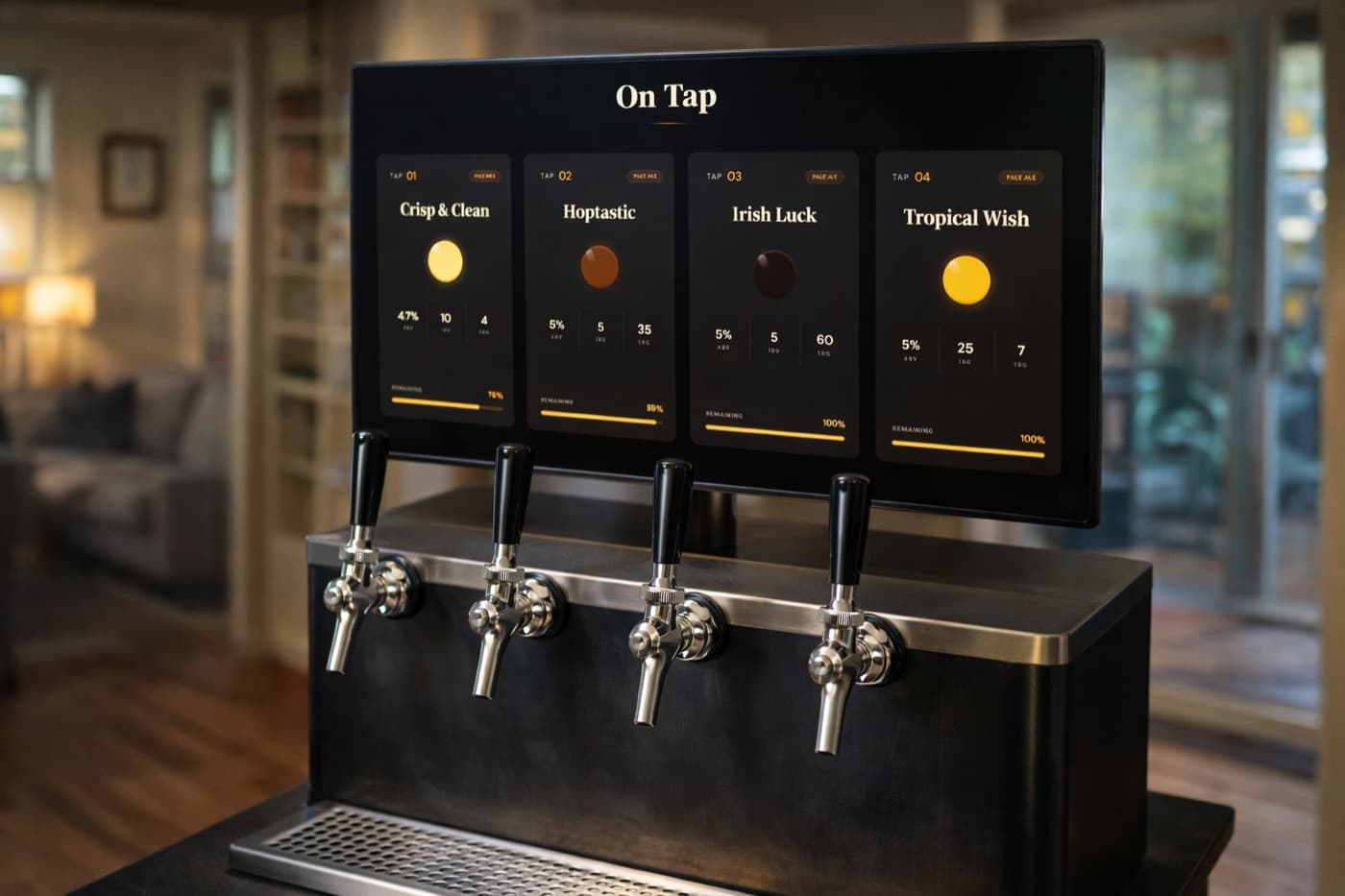
Keep a note of what works for each beer. And if you'd rather not answer "what's on tap?" every time friends come over, a live tap list handles that for you.
Once the pressure is dialed in, show off what's pouring. Keggio turns any screen into a live tap list. See the live tap display →
Finding the right pressure takes a little patience, but once you dial it in for your setup, you rarely need to change it.
Keep reading
- Kegerator Temperature Guide — Ideal Settings for Every Beer StyleFind the perfect serving temperature for lagers, IPAs, stouts, and more. A practical guide to dialing in your kegerator.
- How to Set Up a Kegerator at Home — Complete GuideEverything you need to know about setting up your first home kegerator, from choosing the right unit to pouring your first beer.