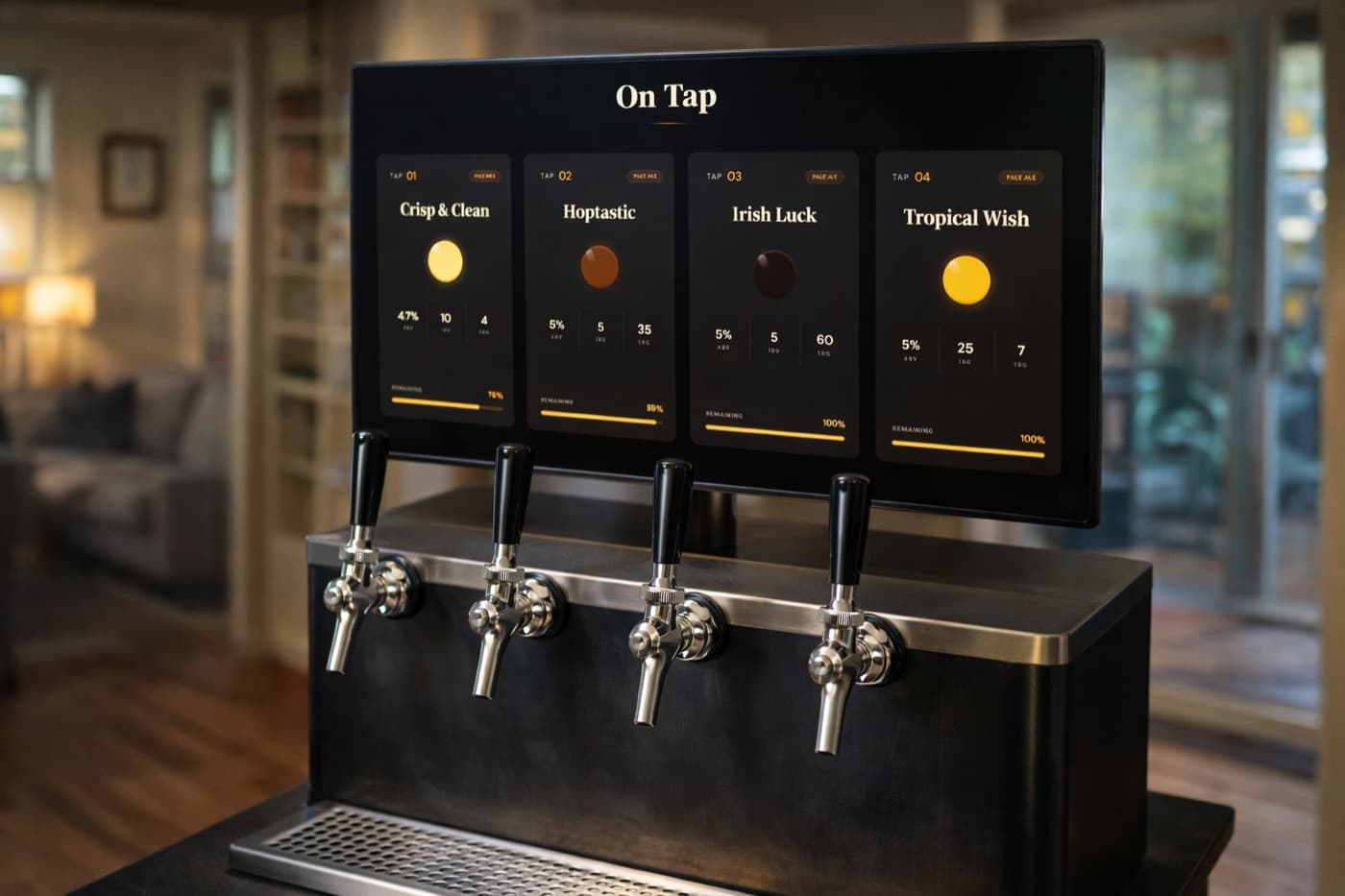
If you're setting up a kegerator, one of the first decisions you'll make is what type of keg to use. For homebrewers, it usually comes down to two options: corny kegs (Cornelius kegs) and Sanke kegs (commercial kegs).
Corny Kegs — The Homebrew Standard
Corny kegs were originally used by the soda industry (Pepsi and Coca-Cola). When soda companies switched to bag-in-box systems, homebrewers snapped up the surplus. They've been the default homebrewing keg ever since.
Two Types: Ball Lock and Pin Lock
- Ball lock — more common, slightly taller and narrower. This is what most homebrewers use.
- Pin lock — slightly shorter and wider, with pin-style connectors. Cheaper but harder to find parts for.
If you're buying new, go ball lock. It's the standard.
Pros
- Easy to open and clean — the lid pops off with a quick release
- Easy to fill — just pour your beer in through the top
- Widely available — new and used, with tons of accessories
- Pressure relief valve on the lid — easy to vent over-carbonation
- 5-gallon size fits most homebrew batch sizes perfectly
Cons
- Can be pricey new (~$80-120 each)
- Used ones may need gasket replacement — cheap and easy, but worth noting
- Only comes in 2.5 and 5 gallon sizes (mostly)
Sanke Kegs — The Commercial Standard
Sanke kegs are what you'll find at every bar, brewery, and beer distributor. If you've ever bought a keg of commercial beer, it was a Sanke.
Pros
- Extremely durable — stainless steel, built to be thrown around by delivery drivers
- Available in many sizes — 1/6 barrel (5.16 gal), 1/4 barrel (7.75 gal), 1/2 barrel (15.5 gal)
- Can serve commercial kegs without any conversion — buy a keg from a brewery and tap it
Cons
- Hard to fill with homebrew — you need a special Sanke filling adapter or a modified coupler
- Hard to clean — you can't just pop the top off. Requires disassembly or a CIP (clean-in-place) setup
- Requires a Sanke coupler — different from ball lock disconnects
- Heavier and bulkier
So Which Should You Use?
For homebrewing → Corny kegs. No question. They're designed to be opened, filled, and cleaned by hand. The 5-gallon size matches a standard homebrew batch.
For serving commercial beer → Sanke. If you want to buy a keg from your local brewery and tap it at home, you need a Sanke coupler. Many kegerators come with one.
For a mixed setup — lots of homebrewers run a kegerator with mostly corny kegs for their own beer, plus one Sanke tap for a commercial keg when friends are coming over.
Can You Do Both?
Yes. You just need the right disconnects/couplers for each type. Your kegerator doesn't care what kind of keg is inside — it's all just beer line to CO2 to keg. The only thing that changes is the fitting that connects the line to the keg.
A tool like Keggio lets you track both corny and commercial kegs side by side — what's on tap, how much is left, and what style each one is.
The Verdict
Start with corny kegs. They're the gold standard for homebrewing — easy to use, easy to clean, and a perfect fit for 5-gallon batches. Add a Sanke coupler later if you want to serve commercial beer alongside your homebrew.
Corny or Sanke, Keggio tracks every keg and shows what's on tap on a live display. See the live tap display →
Keep reading
- How Long Does a Keg Last? Calculating It ProperlyThe real math behind keg shelf life. How to calculate days-to-empty by keg size, pour size, and drinking pace — plus how long a keg actually stays good once tapped.
- How to Set Up a Kegerator at Home — Complete GuideEverything you need to know about setting up your first home kegerator, from choosing the right unit to pouring your first beer.