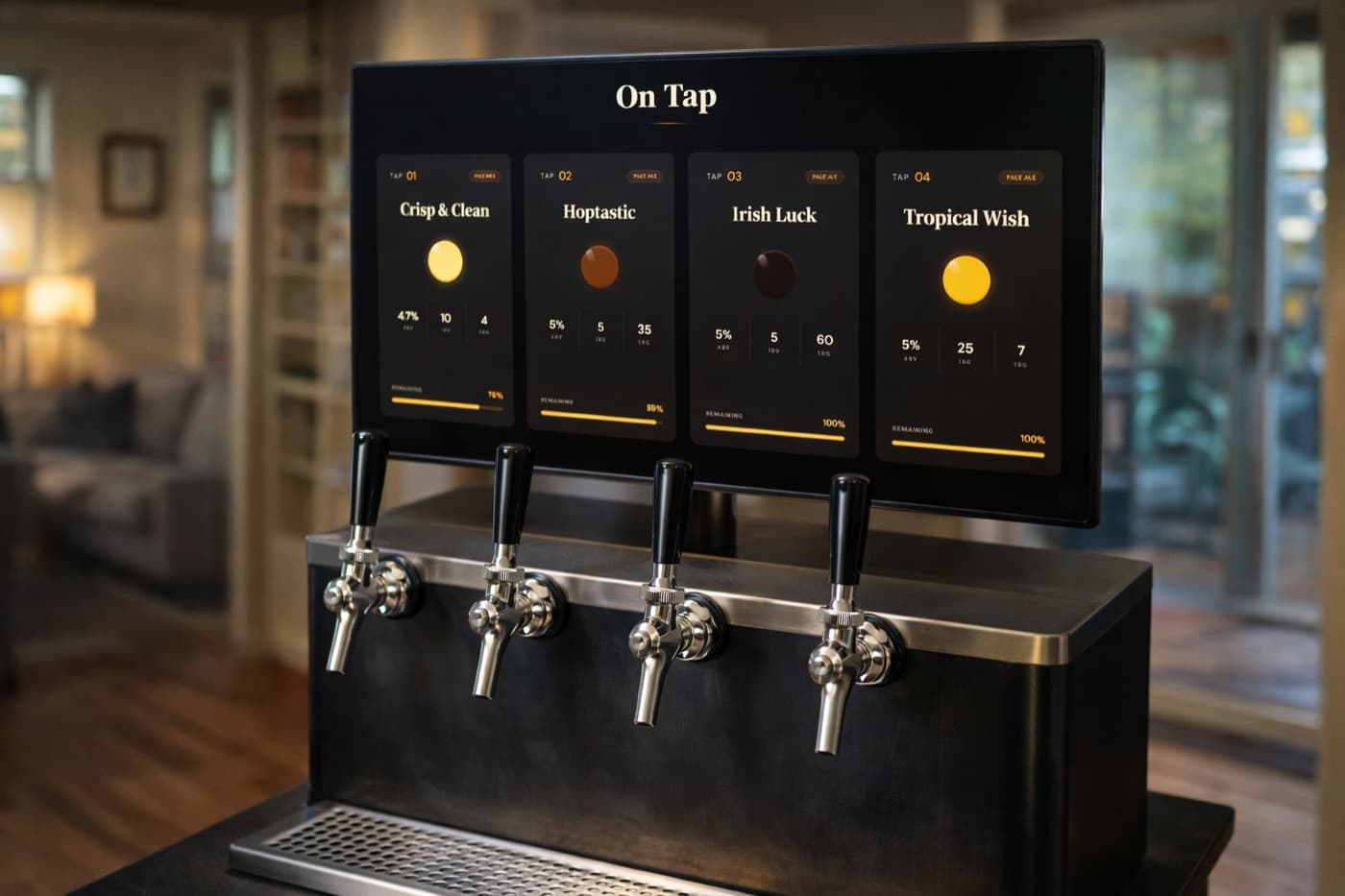
If your homebrew tastes great from the bottle but something's off when you pour it from the kegerator, your beer lines are the most likely culprit. Dirty lines cause buttery, sour, or funky off-flavors — even after just a couple of weeks.
How Often to Clean
- Every 2 weeks for regular use
- Every time you swap a keg (different beer going through the same line). Keeping a live tap list makes it obvious when a keg is about to kick and a clean is due
- Immediately if you notice off-flavors, reduced flow, or visible buildup
Commercial bars clean their lines every two weeks by law in most places. Your homebrew deserves the same treatment.
What You'll Need
- Beer Line Cleaner (BLC) — alkaline-based cleaner made for draft lines. Don't use dish soap or bleach.
- A cleaning kit or hand pump — a small hand pump with a faucet adapter makes this easy. You can also use a keg filled with cleaning solution and push it through with CO2.
- Warm water — for mixing the solution and rinsing
- A bucket — to catch the dirty solution coming out of the faucet
Method 1: Hand Pump Cleaning Kit
This is the simplest approach for most home setups.
- Disconnect the keg from the beer line
- Mix BLC with warm water per the instructions (usually 1 oz per gallon)
- Attach the hand pump to the beer line where the keg coupler/disconnect was
- Pump the cleaning solution through until it flows out of the faucet into your bucket
- Let it sit for 15–20 minutes — this is where the cleaning actually happens
- Pump fresh warm water through to rinse — run at least 2 gallons through
- Reconnect your keg and pour off the first pint (it'll be watery)
Method 2: Cleaning Keg
If you have a spare corny keg, this is even easier.
- Fill the keg with warm water + BLC solution
- Connect it to your beer line in place of your beer keg
- Push the cleaning solution through with CO2 at low pressure (2-3 PSI)
- Let it recirculate or sit for 15-20 minutes
- Swap to a keg of plain warm water and rinse thoroughly
- Reconnect your beer keg
Don't Forget the Faucet
Remove your faucet and soak it in BLC solution while you're cleaning the lines. Use a small brush to scrub inside — this is where mold and yeast love to grow, especially on non-forward-sealing faucets.
Signs Your Lines Need Cleaning
- Beer tastes buttery (diacetyl from bacteria)
- Beer tastes sour or vinegary (acetic acid bacteria)
- Reduced pour speed (buildup restricting flow)
- Visible gunk at the faucet opening
- First pour of the day tastes different from later pours
Prevention Tips
- Keep your kegerator cold — bacteria grows faster at warmer temps
- Use forward-sealing faucets (Perlick, Intertap) — they don't let air in when not in use
- Replace beer lines every 1-2 years even with regular cleaning
- Keep the drip tray clean — standing beer attracts fruit flies and mold
Fresh lines, fresh keg? Let guests know what's on tap with a live tap list on any screen. See the live tap display →
Clean lines, clean beer. It takes 30 minutes every couple of weeks and makes a massive difference in how your beer tastes on tap.
Keep reading
- Kegerator Temperature Guide — Ideal Settings for Every Beer StyleFind the perfect serving temperature for lagers, IPAs, stouts, and more. A practical guide to dialing in your kegerator.
- How to Set Up a Kegerator at Home — Complete GuideEverything you need to know about setting up your first home kegerator, from choosing the right unit to pouring your first beer.