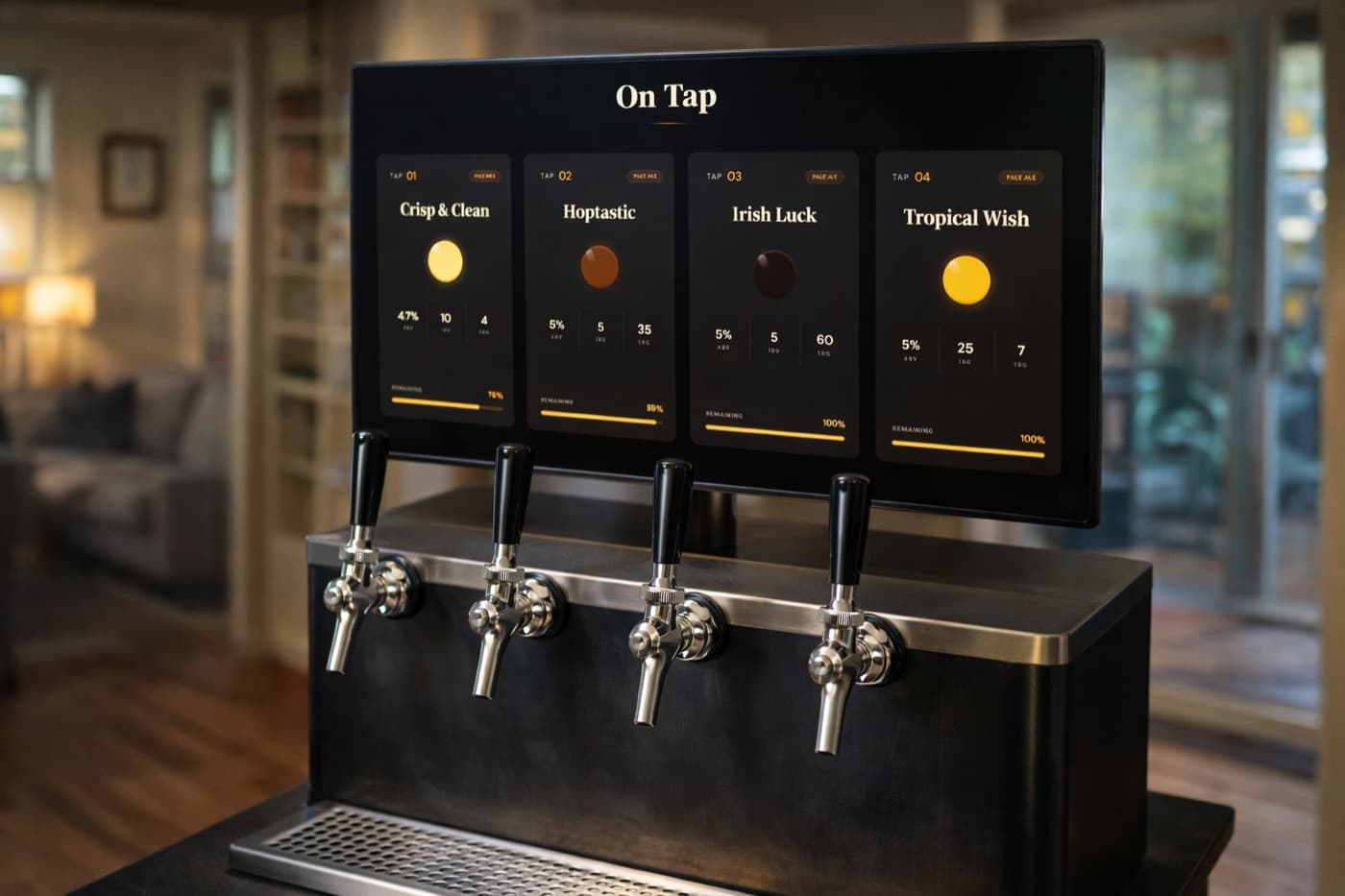
Setting up a kegerator is one of the best upgrades you can make to your home bar. Whether you're serving your own homebrew or commercial kegs, having draft beer on tap at home is a game-changer. Here's everything you need to get started.
Choosing Your Kegerator
There are two main approaches:
- Buy a pre-built kegerator — Companies like Kegco, EdgeStar, and Danby make ready-to-go units. Plug it in, connect a keg, and you're pouring. Best for most people.
- Convert a chest freezer or fridge — More work, but you get more space and flexibility. You'll need a temperature controller (like an Inkbird) to keep it from freezing your beer.
For a first setup, a single-tap pre-built unit is the easiest path. You can always upgrade later.
What You'll Need
Beyond the kegerator itself, make sure you have:
- CO2 tank — A 5 lb tank is standard for home use. You'll get hundreds of pints before needing a refill.
- Regulator — Controls the pressure from the CO2 tank to the keg. A dual-gauge regulator shows both tank pressure and serving pressure.
- Beer line — 3/16" ID vinyl tubing is standard. Length matters — too short and your beer will pour foamy. Start with 5-6 feet for most setups.
- Keg coupler or disconnect — Depends on your keg type. Ball lock disconnects for corny kegs (homebrew), or a Sanke coupler for commercial kegs.
- Faucet and shank — Usually included with pre-built kegerators. If building your own, get a Perlick or Intertap forward-sealing faucet — they don't stick.
Setting the Right Temperature
Most beers serve best between 36-40°F (2-4°C). Set your kegerator to 38°F and adjust from there:
- Lagers and light ales — 36-38°F
- IPAs and pale ales — 38-42°F
- Stouts and porters — 40-45°F
For a full style-by-style breakdown, see the kegerator temperature guide.
CO2 Pressure Settings
Serving pressure depends on temperature and beer style, but a good starting point:
- 10-12 PSI for most ales at 38°F
- 12-14 PSI for lagers
- Higher (25-30 PSI) for heavily carbonated styles like hefeweizens or Belgian wits — but only for carbonating, then drop to serving pressure
If your beer is too foamy, lower the pressure by 1-2 PSI and wait a few hours. If it's flat, bump it up.
The CO2 pressure guide has a full reference table and force-carbonating steps.
Tracking Your Taps
Once you've got beer flowing, you'll want to keep track of what's on tap and how much is left. This is where a tool like Keggio comes in handy — you can track your kegs, monitor pour levels, and even display a live tap list for guests on a tablet or old laptop.
Maintenance Tips
- Clean your lines every 2-4 weeks with BLC (Beer Line Cleaner). Dirty lines are the #1 cause of off-flavors.
- Check for CO2 leaks by spraying soapy water on connections. Bubbles mean a leak.
- Replace gaskets on faucets and couplers annually.
- Keep the drip tray clean — empty it regularly and give it a good scrub.
Ready to Pour
That's it — with the right gear and a little patience dialing in pressure and temperature, you'll be pulling perfect pints at home. The setup pays for itself surprisingly quickly if you're a regular beer drinker, and it's a guaranteed conversation starter when friends come over.
Beer flowing? Put your taps on a screen so guests can see what's pouring and how much is left. See the live tap display →
Happy brewing!
Keep reading
- Corny Keg vs Sanke Keg — Which One Should You Use?Comparing ball lock corny kegs and Sanke kegs for homebrewing. Pros, cons, and when to use each.
- How Long Does a Keg Last? Calculating It ProperlyThe real math behind keg shelf life. How to calculate days-to-empty by keg size, pour size, and drinking pace — plus how long a keg actually stays good once tapped.