Getting your kegerator temperature right makes a bigger difference than most people realize. Too cold and you mute the flavors your beer was brewed for. Too warm and you get foam city every time you pull a pint.
The General Rule
Most beers serve best between 36–42°F (2–6°C). Set your kegerator to 38°F (3°C) as a starting point and adjust from there based on what you're pouring.
Temperature by Style
Light Lagers and Pilsners (36–38°F / 2–3°C)
These styles are meant to be crisp and refreshing. Colder temperatures keep them clean and suppress any off-flavors. Think Pilsner Urquell, Helles, or your homebrew lager.
IPAs and Pale Ales (38–42°F / 3–6°C)
A touch warmer lets the hop aroma and flavor come through. If your IPA tastes flat and one-dimensional, try bumping the temp up a couple degrees.
Wheat Beers and Saisons (40–45°F / 4–7°C)
Belgian wits, hefeweizens, and saisons have complex yeast character that gets hidden when too cold. Give them room to breathe.
Stouts and Porters (42–48°F / 6–9°C)
Dark beers with roasty, chocolatey, or coffee-like flavors benefit from warmer serving temps. A stout at 36°F tastes like cold coffee water. At 45°F, you'll actually taste what you brewed.
Barleywines and Imperial Stouts (48–55°F / 9–13°C)
Big, boozy beers are best enjoyed at cellar temperature. If your kegerator can't go that warm, pour it and let it sit for 10 minutes.
Common Problems
Beer is too foamy — Your kegerator might be too warm, or your CO2 pressure is too high for the temperature. Lower the pressure or the temp.
Beer tastes flat or muted — Probably too cold. Bump up by 2°F and wait a day for the keg to stabilize.
Temperature fluctuates — Don't open the door too often. If you're using a chest freezer conversion, make sure your temperature controller probe is taped to the side of the keg, not hanging in open air.
Tracking What Works
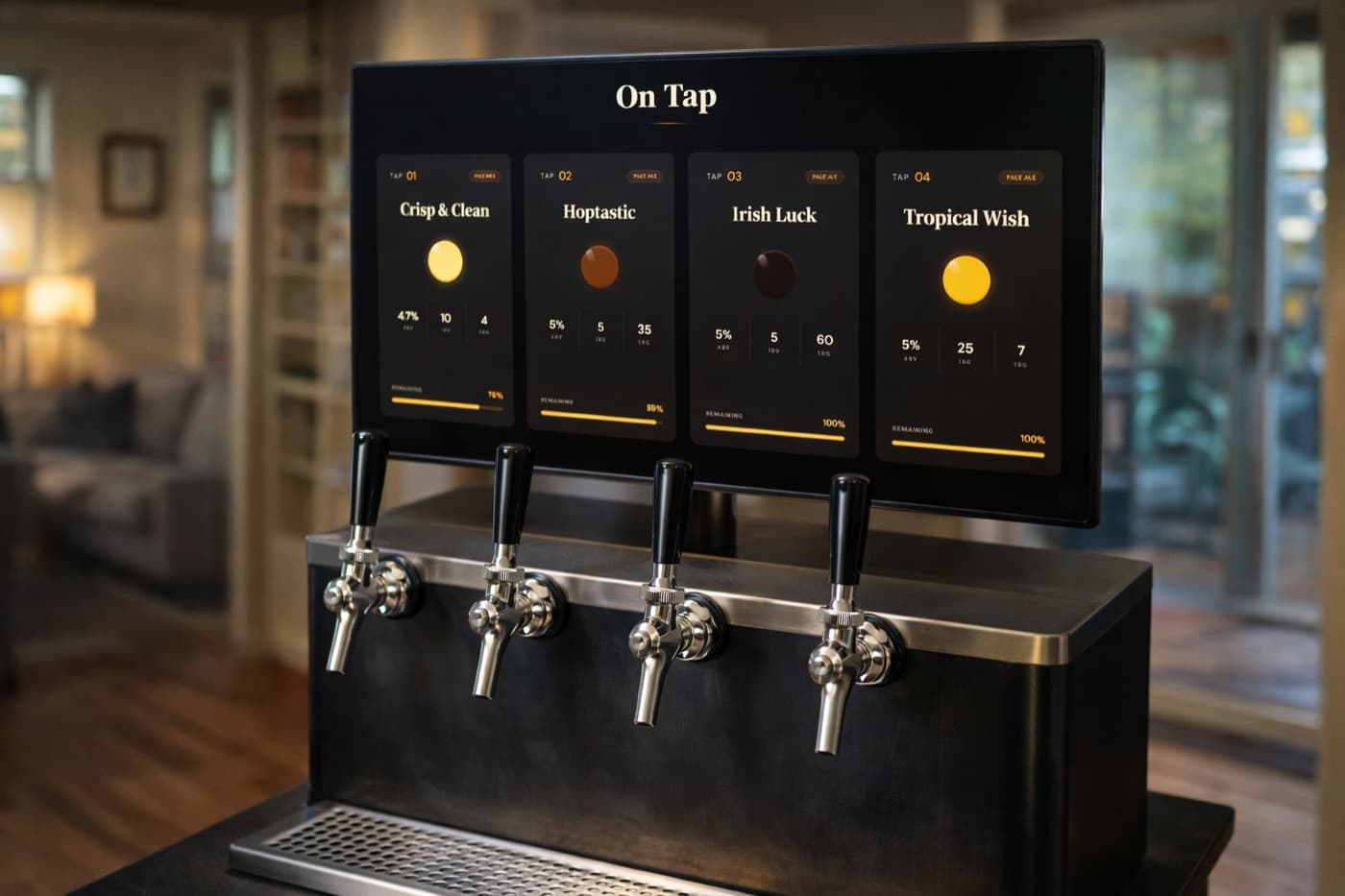
If you're running multiple taps with different styles, it can be hard to optimize for all of them with a single thermostat. Set your kegerator to a middle-ground temperature and adjust serving expectations — and let a live tap list show guests what's pouring, with style and ABV for each tap, so they know what to expect.
Keggio puts every tap on a screen: beer, style, ABV and how much is left. See the live tap display →
The best temperature is the one that makes your beer taste the way you intended. Trust your palate over any guide — including this one.
Keep reading
- CO2 Pressure Settings for Every Beer StyleA practical guide to finding the right CO2 pressure for carbonating and serving homebrew from your kegerator.
- How to Clean Beer Lines — A Step-by-Step GuideDirty beer lines are the #1 cause of off-flavors in draft beer. Here's how to keep your lines clean and your pours tasting fresh.